conor quinn
“I find painting to be my most effective form of therapy - where nothing external can distract me”
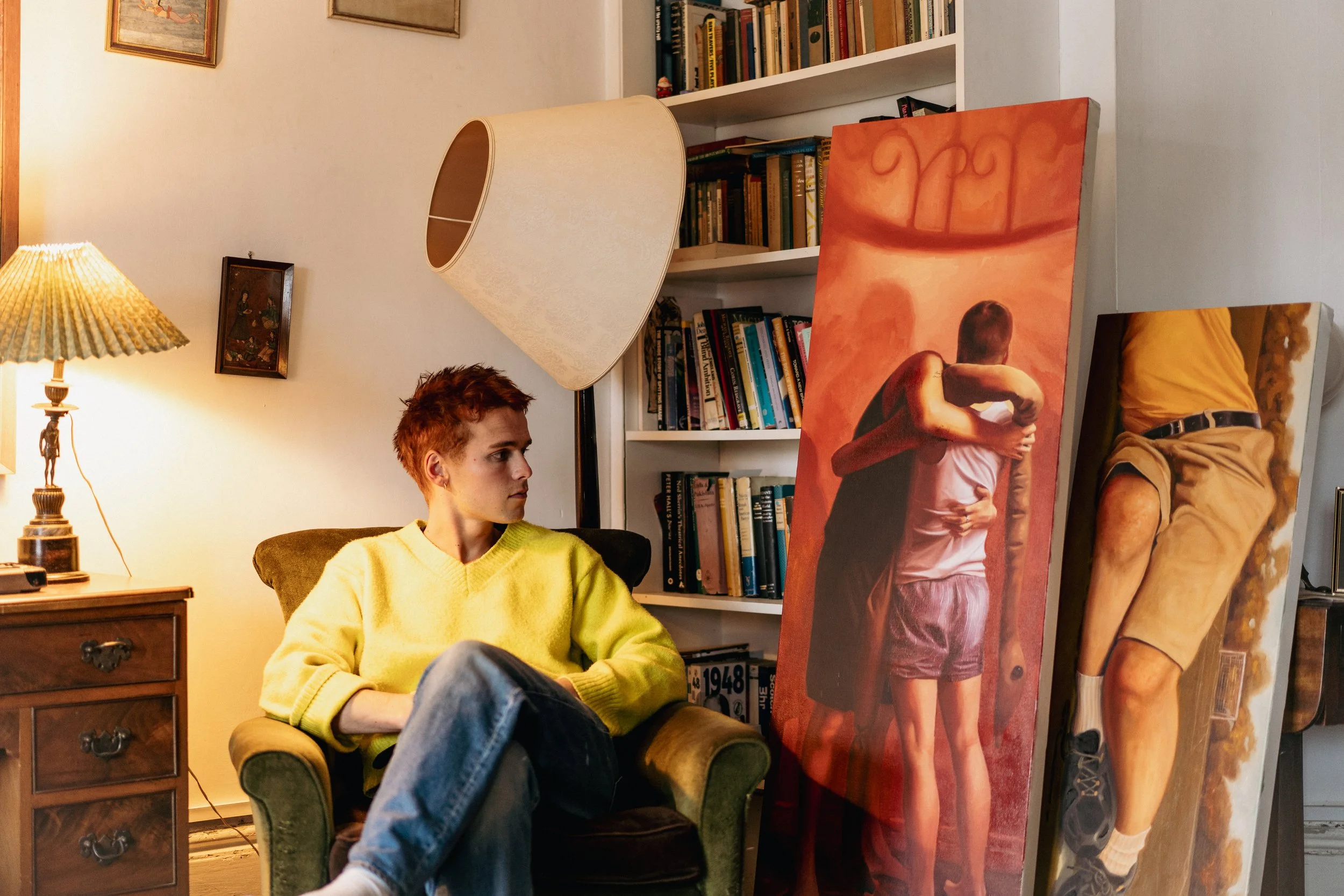
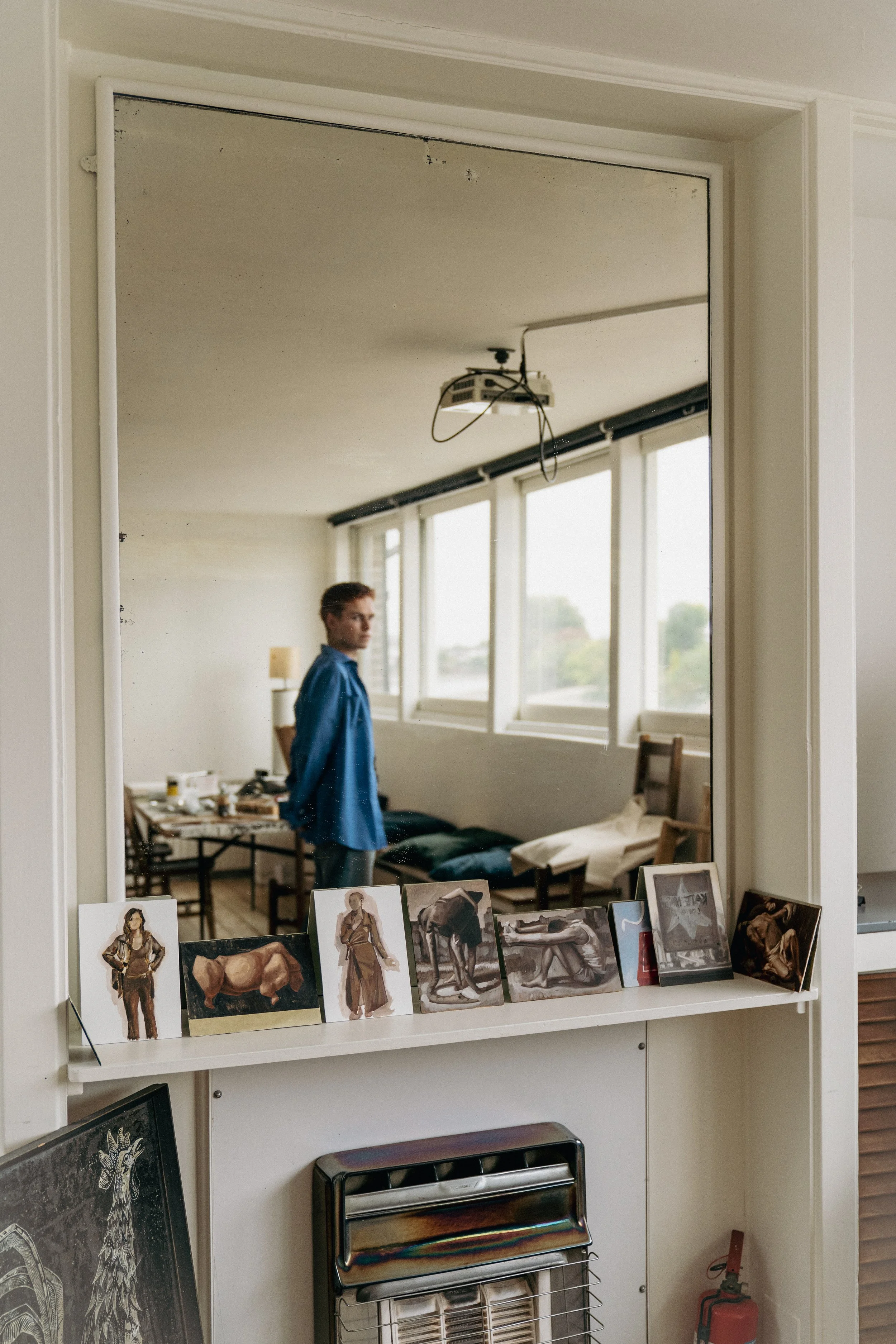
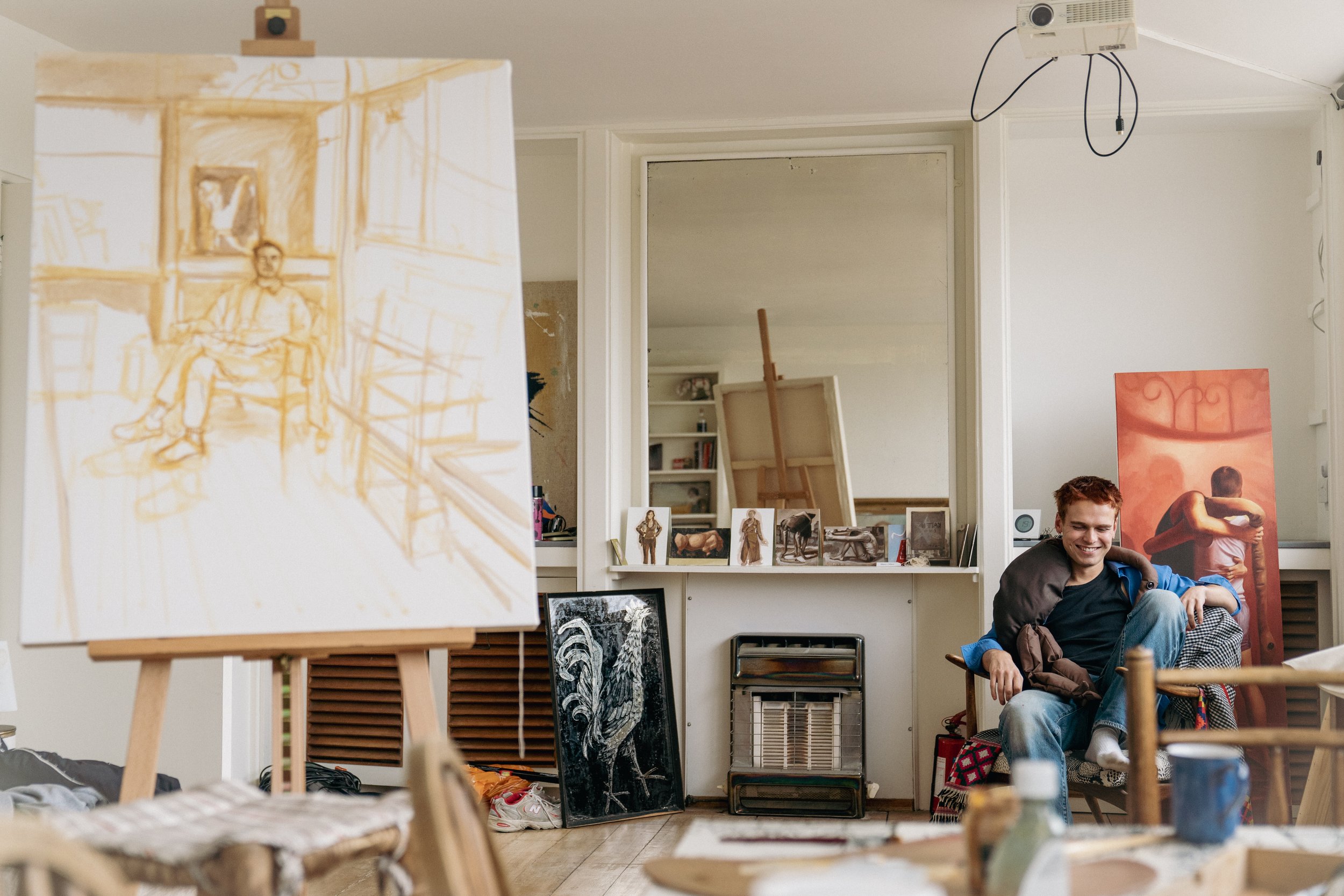
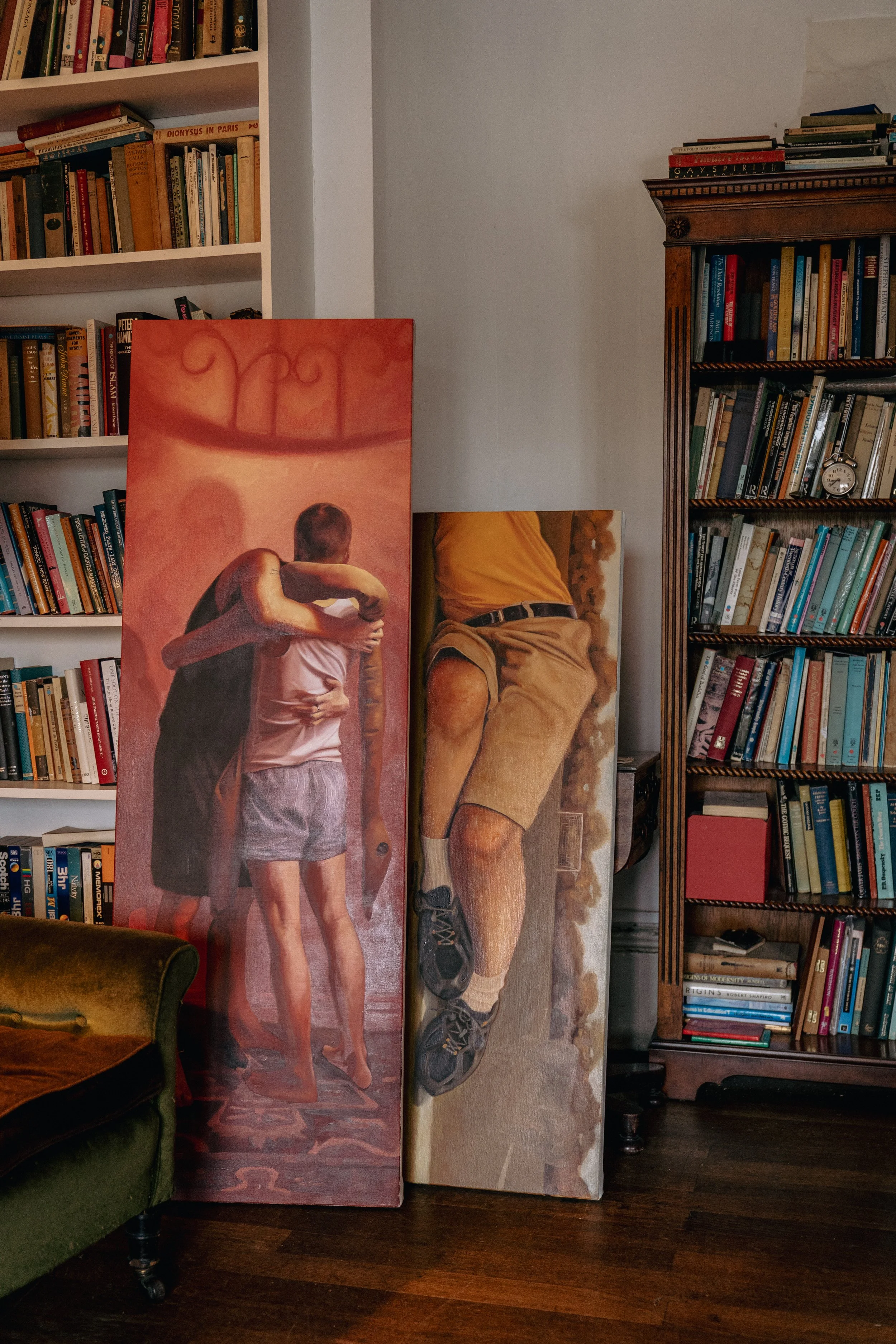
London-based British-Irish painter and soft sculptor Conor Quinn explores queerness, identity, and the body through surreal, psychologically charged compositions. Raised Catholic and trained in stop-motion animation, his practice began with handcrafted puppets that challenged gender norms, evolving into an unapologetically queer visual language. From his residency in Hammersmith, Croix sat down with Conor ahead of his latest exhibition, All Eyes on Me, at Tiderip. Conor represents the next frontier of queer expression in contemporary art.
What moment started this whole thing for you?
I’d put the foundation of my practice down to my background in animation. Narrative plays a large role in the construction of my paintings and having specifically studied stop-motion animation, the puppetry I would have animated is now captured in a single frame. For me, the potential of a still puppet leaves far more to the imagination and allows the viewer to create their own narrative, something I strive for in my paintings.
There’s something really personal in these pieces - how much of you is in the work?
There’s definitely a blurred line within my personal representation. Sometimes I use my puppets to put more of myself in my work; perhaps there is a vulnerability that I struggle to reach when my face is attached to my subject.
Do you ever think about who’s watching - or is it more about what you’re revealing?
I never think about who in particular will look at my paintings, I’d like to think that I reveal just enough for anyone to relate to my work.
A lot of your work seems to sit between confidence and vulnerability - where does that tension come from?
I suppose in being queer it’s inevitable that one’s confidence varies depending on one’s environment; using puppetry as a stand in for human relationships had originally allowed me to protect my privacy among all environments. Now, this same approach is used to forgo my audience’s comprehension and approval, creating an empowered practice.
When you’re in the middle of painting, what does that headspace feel like?
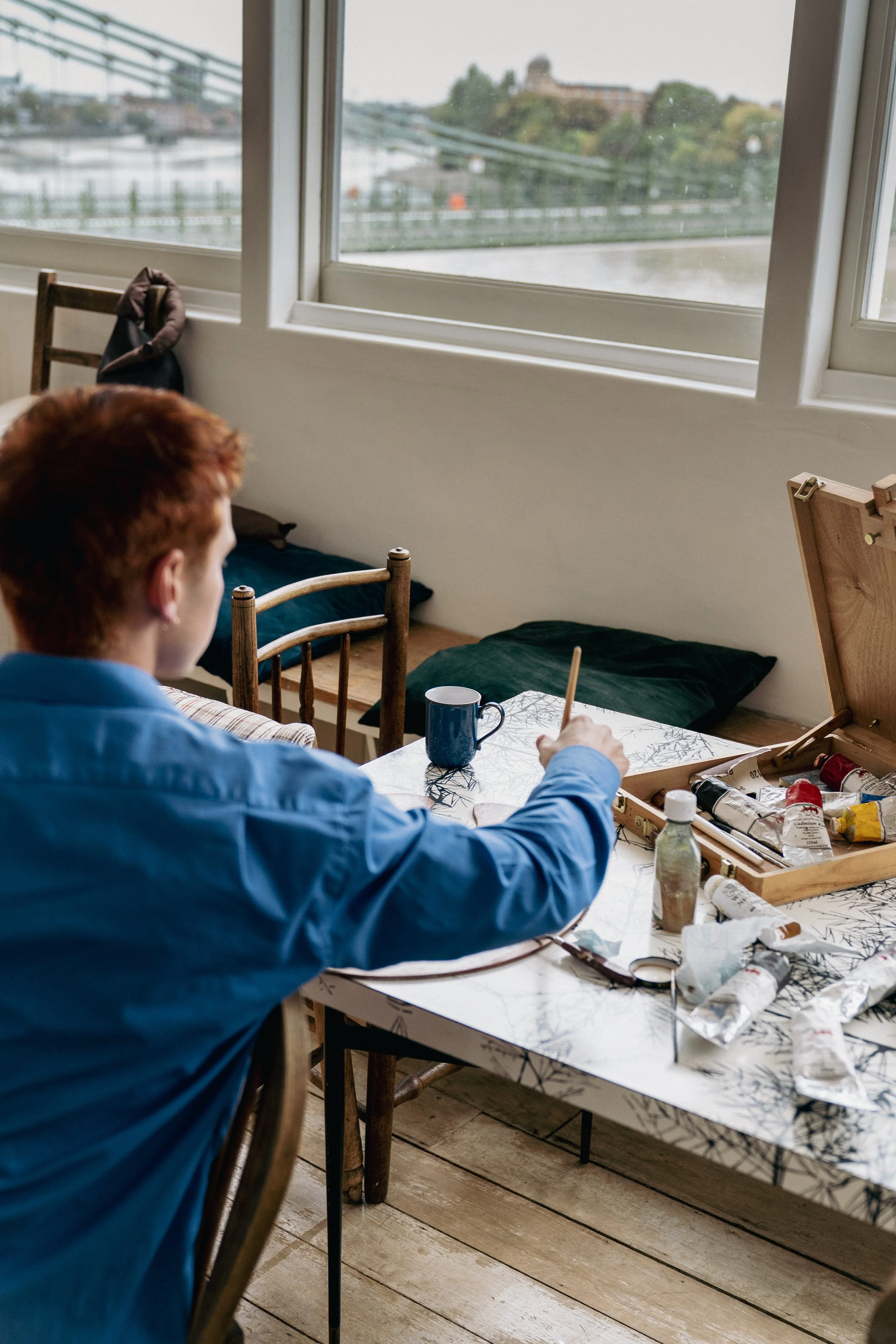
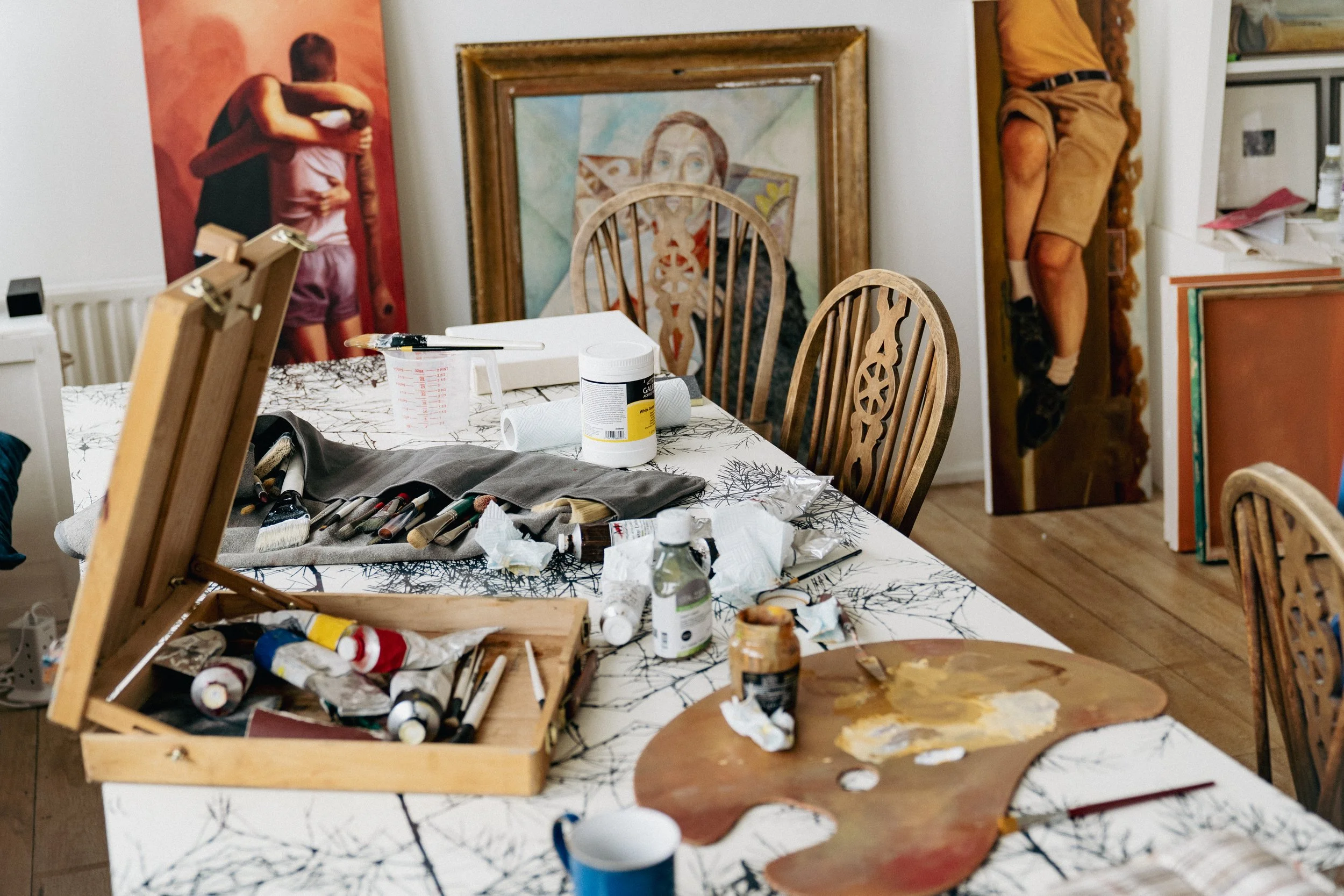
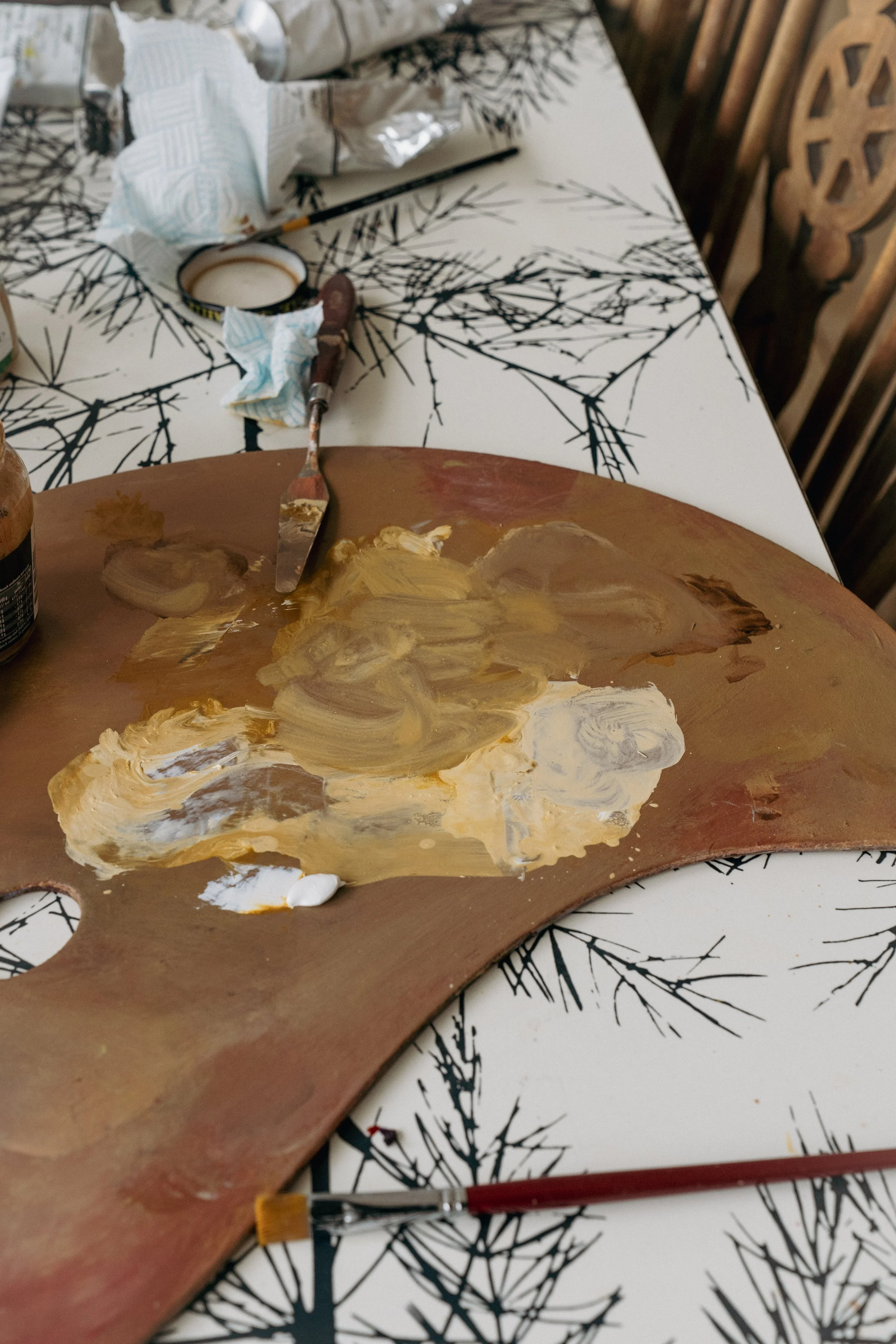
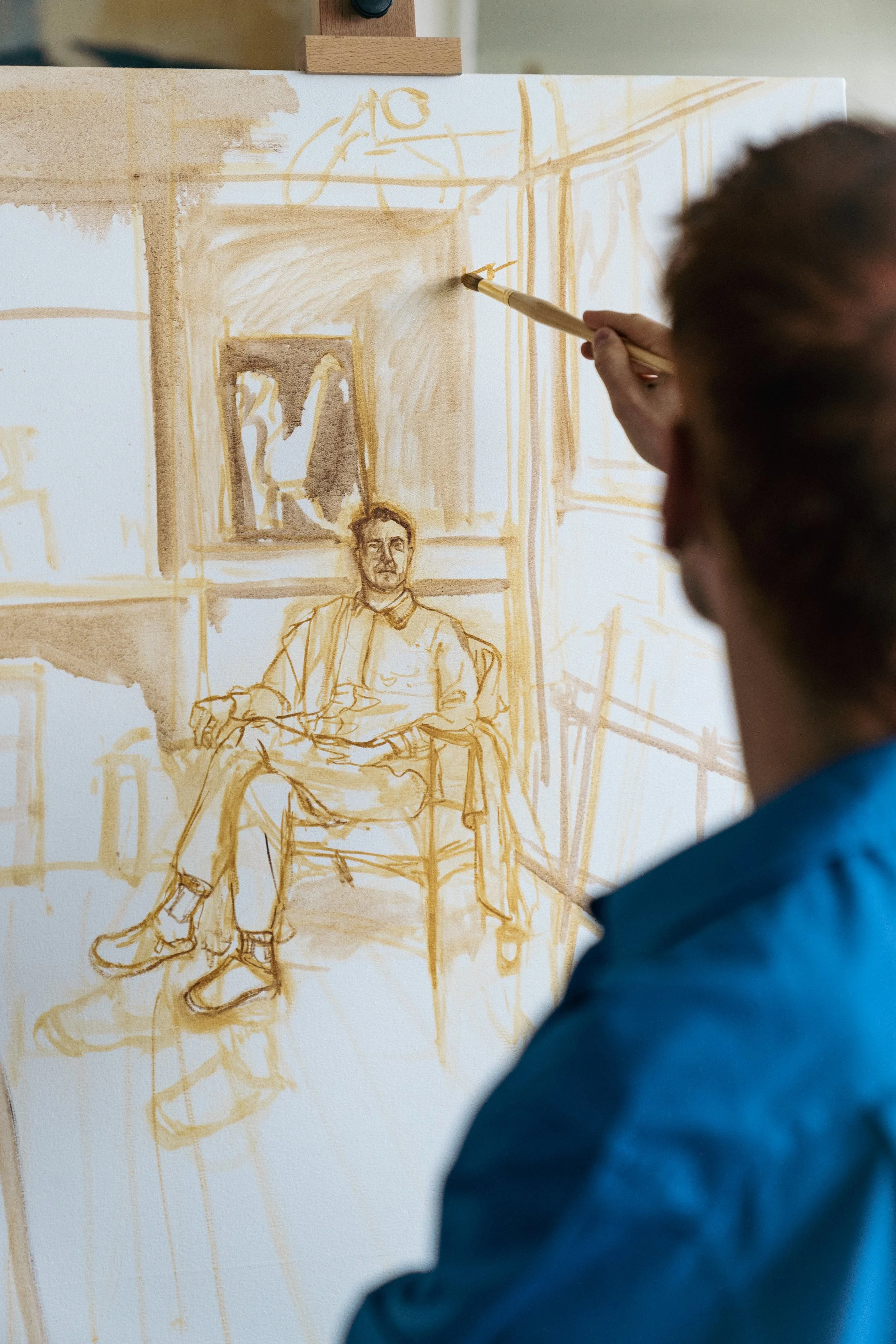
Much like most painters, I find painting to be my most effective form of therapy. It’s a completely different headspace where nothing external can distract me, only one part of a painting can distract from the other.
How do you decide when something’s finished — or when to stop looking at it?
Honestly, this is something that I can confidently say I’m very good at. The moment I feel a painting is finished, I put down my brush and picking it back up isn’t a consideration.
Are there any accidents or moments in the studio that ended up shaping the final pieces?
Always. Within the first hour of a days painting, something on the canvas will surprise me and that manages to create a knock on effect of new ideas and visuals which are even exciting to me.
When you look back at where you started, does this work feel like a continuation or a new chapter?
With a comparison to my approach in animation, I feel that every series of work I do can be self contained. It feels quite obvious that the work is still mine, however I try to let my brain restart with each new project as I would do a film and allow a whole series of ideas start afresh off a new independent catalyst.
What do you hope someone feels when they stand in front of your work?
I’m perfectly happy as long as people feel something; my work feels open enough that anyone who looks at it should get exactly what they put in. As long as I can avoid boredom, I have done my job..
For more on Connor Quinn: