
Behind the runway: The true cost for consumers and brands
geopolitical tensions and the fashion industry.
by Louis Lorgis-Leech
The fashion industry is facing unprecedented pressures from international turbulence, trade disruptions, and evolving sustainability rules. Brands are rethinking how they source materials, manage production, and control costs, with fast-fashion and luxury sectors adopting very different strategies to navigate uncertainty. These challenges show how today’s volatile, uncertain, complex, and ambiguousenvironment is transforming supply chains, pricing, and consumer expectations worldwide.
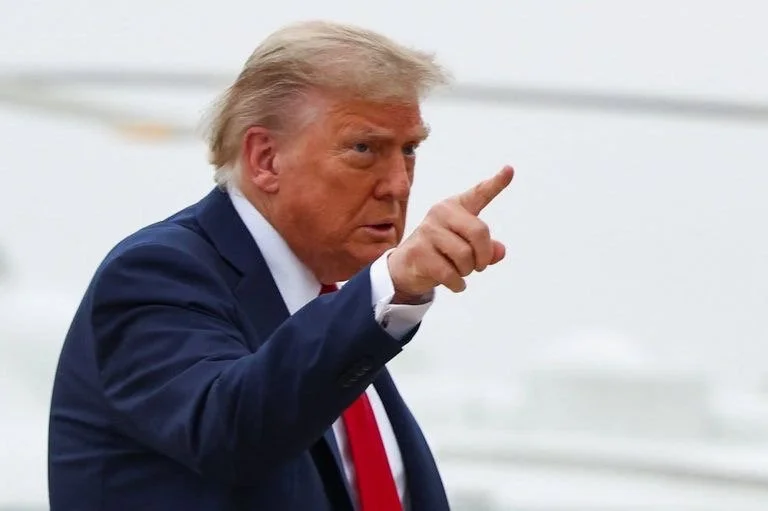
47th President of the United States of America, Donald J Trump
Firstly, it should come as no surprise that red sea disruptions have severely affected supply chains due to ongoing tensions in the Middle East, in particular Iran vs The US + Israel.
The recent prevention of ship access in the Strait of Hormuzhas created a double-squeeze on raw materials.
This is a tension over petrochemicals. Since synthetic fiberslike polyester & nylon are petroleum-derived, instability in the Gulf has caused the price of these man-made materials to skyrocket.
For example, according to Fortune India, commodity polymer prices have risen by more than 20%. Therefore, is it plausible to project that nylon costs could increase by a similar percentage if the situation persists?
For an affordable fast-fashion brand like H&M, the geopolitical volatility in the Gulf has turned the traditional JIT (just-in-time) model into a liability.
With polymer prices skyrocketing as illustrated, H&M has had to shift towards a Buffer and Blend strategy where they they have increased physical stock holdings in order to reduce lead times, while simultaneously accelerating the use of recycled textile-to-textile fibers to decrease their reliance on petroleum-linked polyester.
The increase in physical stock holdings links to an emerging trend of deglobalisation where fashion companies are reshoring some of their practices from low-cost Asiancountries to Turkey & Portugal (mainly). From December 2025-February 2026 some of the orders for the Spring/Summer 2026 collections were aggressively movedfrom Asia.
Not only are these two countries (especially Portugal) less risky choices in terms of logistics, but they also comply with EU regulations better.
Under the new Strategic Allied Framework for Europe (SAFE), Turkey is now part of the EU Customs Union.
The primary reason for moving to Portugal is because it acts as a zero-risk transparency hub. (which I will get onto later).
However, given their business model & their positioning in the market, they cannot fully outrun the oil market as over half of their production is offshored to South&East Asia; consequently, H&M has begun signalling price hikes for the Autumn/Winter 2026 season, not just due to the increase in Polymer prices but also due to higher energy prices mirroring 2022 Ukraine-Russia related energy price soars.
As H&M CEO Daniel Ervér stated, this political conflict will create a “spillover effect” into the fashion industry.
While Ervér has not stated a specific price increase we can assume this will be the case as from other close competitors like Next PLC, they have stated a 5-10% price increase forAutumn/Winter 2026 assuming that this petrochemical surge persists.
While I don’t think that core essentials for your wardrobe that have a small amount of polyester in will be affected, there will certainly be a ‘petrochemical tax’ on those garments with a higher polyester composition.
Expect to see this on items such as puffer jackets & sportswear, typical, mainly polyester-based items.On the other hand, Prada experiences this ‘spillover effect’differently; while their energy bills for Italian factories have risen, their 2019"Re-Nylon" initiative serves as a buffer against petroleum volatility.
Since they have partnered with Aquafil, their nylon used is 100% recycled from the ocean such as from fishing nets. Subsequently, they are less vulnerable to the 20% spike in polymer prices that is currently crippling the mass market.These recycled objects from the ocean are shipped to specialized chemical plants in Slovenia and Italy so thatthe final chemical depolymerization, essentially, turning waste back into ‘new’ nylon happens in Europe, so Prada does not need to rely on the transportation of material from the Middle East.
This clever vertical integration structure in line with their sustainability commitments allows them to absorb the cost of other global fluctuations from the Middle East such as oil& energy since their synthetic fibre costs will not be affected unlike H&M. Thus, through Prada’s sustainability measures, they do not need to pass of an inflationary pressure to the consumer.
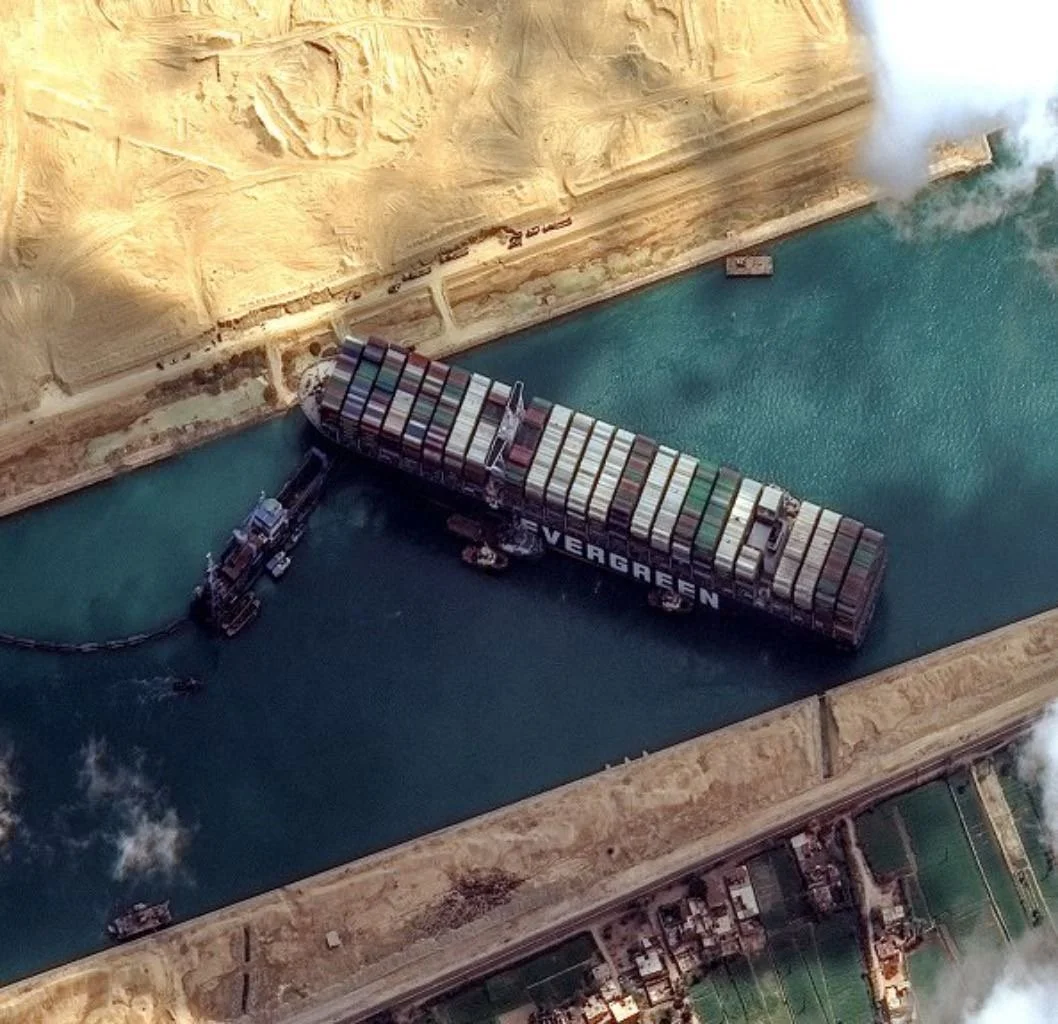
Evergreen cargo ship blocking the Suez Canal, 2021
While one may argue that they would not have had to pass this pressure onto the consumer anyway due to the big gap between production cost as opposed to retail price (which for the re-edition re-nylon bags increased several times from 2019-24 all the way from below £1,000 up to £1,500) it does show that higher end fashion brands who are more sustainable seem to be more immune from any VUCAsituation as opposed to fast-fashion brands. Overall, it is not unusual nor unheard of for supply chains to be significantly disrupted, not just in fashion, but in othersindustries due to politics or any type of operational incident. Lets not forget about the 2021 Suez Canal blockage…
2026 is seeing new frictions in West Africa and Indiaregarding land rights and "Cotton Diplomacy."
For example, the April 2026 EUDR Review, has categorized certain cotton-growing regions in India and Nigeria as High-Risk due to their lack of digital land titles.
So, as the EU’sDeforestation Regulation (EUDR) kicks inat the end of 2026 for major traders, any brand sourcing from regions with vague land-use records back to Europe is being blocked at the border. Cotton has become a high-risk commodity, much like conflict minerals
Stella McCartney: Vertical integration mirroring Prada’s supply chain
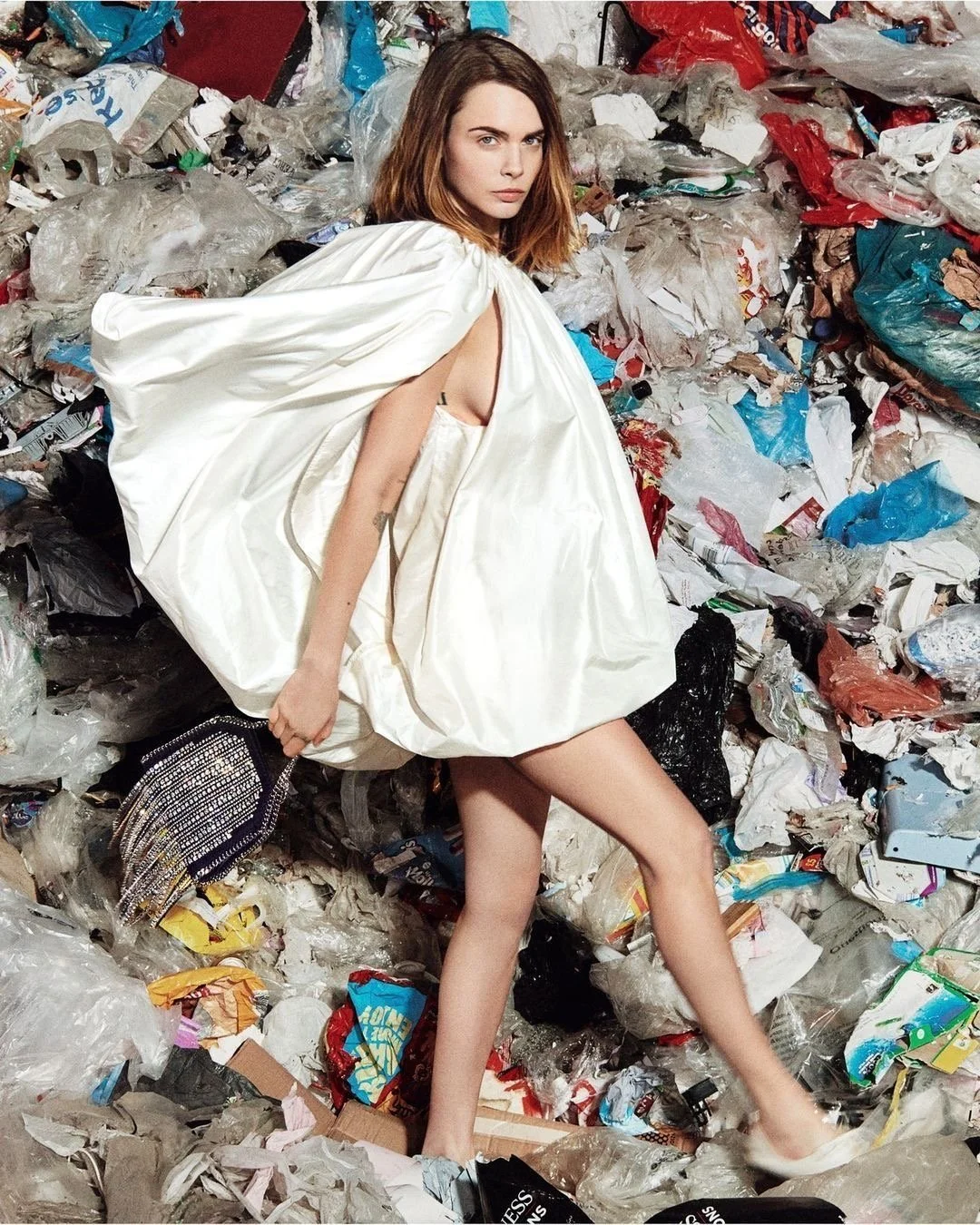
Cara Delelvingne for Stella McCartney, 2024
Stella McCartney has avoided this tension by being in charge of the entire supply chain from start to finish. By investing directly in regenerativecotton farms in Turkeyand the US, she has created a vertically integrated safety net, ensuring her raw materials are immune to everchanging trade sanctions. She doesn't just buy cotton; she owns the data that proves the cotton isn't a geopolitical liability under new EU laws. Yet again, vertical integration seems to be the solution for luxury brands in response to a variety of geopolitical issues.
The EU Digital Product Passport is a system that gives each product a digital record containing key information about its materials, origin, environmental impact, and lifecycle to improve transparency and sustainability across its entire supply chain.
The law was first adopted in 2024 but 2026 is where the first requirements start and by 2030 there will be a full EU-wide coverage across products.
The first requirements focus on setting up DPP’s for priority sectors (like batteries and steel), including collecting and structuring key product data and connecting it to a digital identifier (e.g. QR code) accessible through the EU’s emerging DPP system.
Luxury fashion response: Blockchain technology. But, what exactly is blockchain technology?
Blockchain is a distributed larger technology used to store and shared encrypted data through nodes operated by network participants.
In other words, blockchain is a shared digital record that is copied across many computers, where information is securely stored, verified by the network, and cannot easily be changed.
Luxury fashion conglomerates anticipated a legal framework like this to occur eventually, hence the creation three years before the law was first adopted.
In 2021 an ‘Aura Blockchain Consortium’ based in Geneva was created to provide a passport for brands like Louis Vuitton, Prada, Cartier, Diesel & Mercedes ensuring compliance with EU transparency laws while protecting their own supply chain data.
By working together, luxury brands have been able to use this blockchain to keep supplier details, sourcing methods, and internal processes private, ensuring both transparency and protection of their competitive know-how.
Whereas, in the case of fast-fashion brands like H&M, as mentioned earlier, increasing production in Turkey & Portugal enables them to comply with DPP requirements by using these countries to often handle the final stages of production making it easier to present products as more transparent and sustainable in line with Digital Product Passport requirements under the Ecodesign for Sustainable Products Regulation (ESPR).

“America-First”- The US tariffs…
In April 2025, Donald Trump implemented baseline global tariffs, imposing a 10% tax on most imports worldwide, with higher rates applied to certain countries based on their trade policies.
US tariffs of 25–35% on Chinese imports are forcing fast as well as premium fashion brands to rethink where and howthey manufacture.
As of March 2026, most U.S. fashion imports from China still face the longstanding 25 % Section 301 tariffs with a potential additional 10-15% under Section 122 depending on the type item until July 2026 as of now.
For companies like Tapestry Inc., owner of Coach, the costs of producing in China have risen significantly. For example, under Section 301, Coach faced duties of up to 25% on handbags and leather goods imported from China, significantly increasing production costs.
Historically, China was one of Coach’s main production hubs, but in response to tariffs and trade uncertainty, the company has dramatically reduced its reliance on Chinese factories.
Today, less than 10% of Coach’s production comes from China, with the majority of handbags and leather goods now made in Vietnam, Cambodia, the Philippines, and India.While this diversification reduces exposure to Chinaspecific tariffs, it also introduces higher operational complexity: smaller factories, longer lead times, and fragmented supply chains make production more expensive and less predictable, again linking back to the VUCA framework.
Industry analysts estimate that such shifts can raise production costs by 5–10% per item, putting pressure on margins. In the short term, Tapestry has largely absorbed these increased costs rather than passing them directly to consumers. But I would not be surprised if there were any price increases coming soon on iconic products like the Tabby bag …
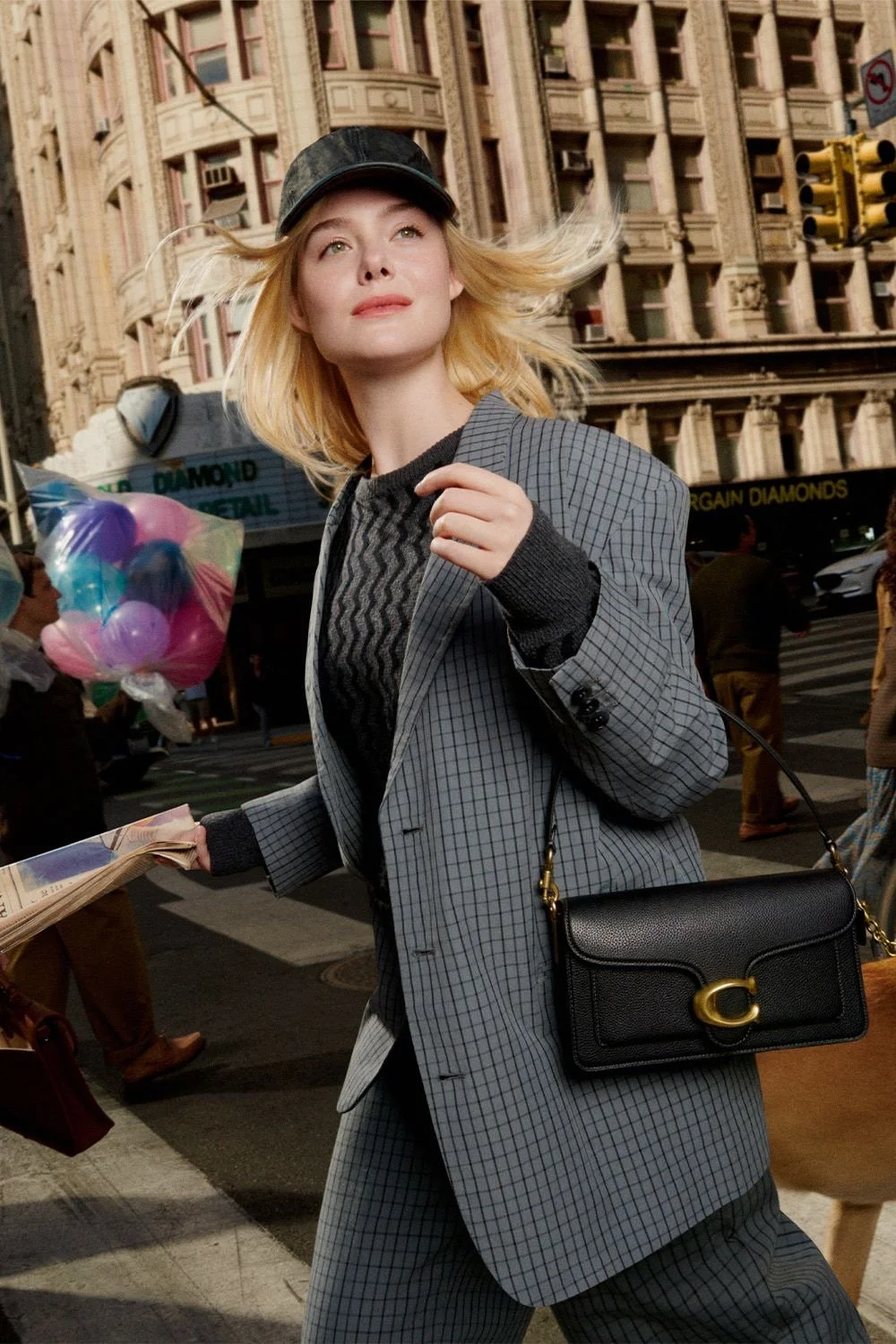
Elle Fanning in Coach’s Tabby campaign
Luxury brands like Hermès have taken a different approach. Instead of relocating production, Hermès has raised prices in the US to offset the tariff impact for EU imports again under Section 301.
For example, according to Sotheby’s, key bag models like the Birkin 25 and Birkin 30 saw a 5% rise & 4.5% riserespectively in a May 2025 U.S. only price increasefollowing Trump’s “liberation day” announcements.
As previously mentioned, April 2, 2025 announced a baseline universal 10% flat tariff that went into effect on the 5th of April. However, in May of 2025 , there was a ‘reciprocal’ shift that went into effect, which included, a 20%tariff on the EU along with a 34% tariff on China.
While the Supreme Court struck down those specific 20%emergency rates last month (February 2026), the administration instantly replaced them with the 10% flat tariffthat had been applied to other countries originally, giving luxury brands a legal reason to keep their U.S. prices at the elevated 2025 levels rather than lowering them. However, the tariff now remains at 15% under Section 122 for up to 150 days anticipating either a potential increase or decrease.
This has left American consumers stuck with a permanent premium because brands are pocketing the difference while waiting to see if the President follows through on his current threat to hike that 10% base up to a very alarming 25%“very soon” in Trump’s words, for the EU.
“We have made a decision, we'll be announcing it very soon and it will be 25% generally speaking and that will be on cars and all other things” – Donald Trump
Now while it is known for Hermès (like other luxury fashion houses such as Chanel) to increase their prices annually for exclusivity purposes, many core Hermès handbags cost roughly 20% more in the U.S. than in Europe showing a clear difference between exclusivity & tariff-related pricing.
Could there be another U.S. specific price increase from Hermès later this year? Who knows? Trump’s actions are unpredictable.
By leveraging brand prestige and loyal customer bases, Hermès can transfer costs directly to consumers without significantly affecting demand due to its price inelasticity.This contrasts sharply with mid-market brands like Coach, which face tighter margins and less flexibility to pass costs onto the consumer.
Fashion is more than just glitz, runways, and seasonal trends, it reflects the complex realities of global trade, politics, and sustainability. Today’s brands/houses must juggle shifting regulations, supply chain challenges, and consumer expectations while finding ways to stay innovative and responsible. Behind every garment lies a network of strategy, logistics, and adaptation, showing that the industry is as much about navigating global complexity as it is about style.