
Is Golden Goose monetizing ‘working-class’ aesthetic?
From Pavement to Price Tag: The Golden Goose Effect
by
Louis Lorgis-Leech
Golden Goose has become known for its intentionally distressed sneakers, blending luxury fashion with street and skate-inspired aesthetics. This raises the question: to what extent is the brand monetizing working-class or subcultural visual cues, and how much is it a creative reinterpretation of imperfection and individuality?

First of all, it is important to note that Golden Goose operates within a broader trend in luxury fashion that embraces imperfection, distressing, and streetwear influences. This trend has become ever so common in recent years, to name few: slouchier bags, more oversized silhouettes, utilitarian wear such as cargos, vintage-inspired designs such as acid-worn denim from the 80s, mixed patchwork designs, exaggerated layering, frayed hems – who remembers ripped jeans in the 2010s?
We have also seen big fashion houses like Balenciaga with their slouchy “Le City” bag or Maison Margiela with their MM6 “loved to death” sneakers follow this aesthetic.
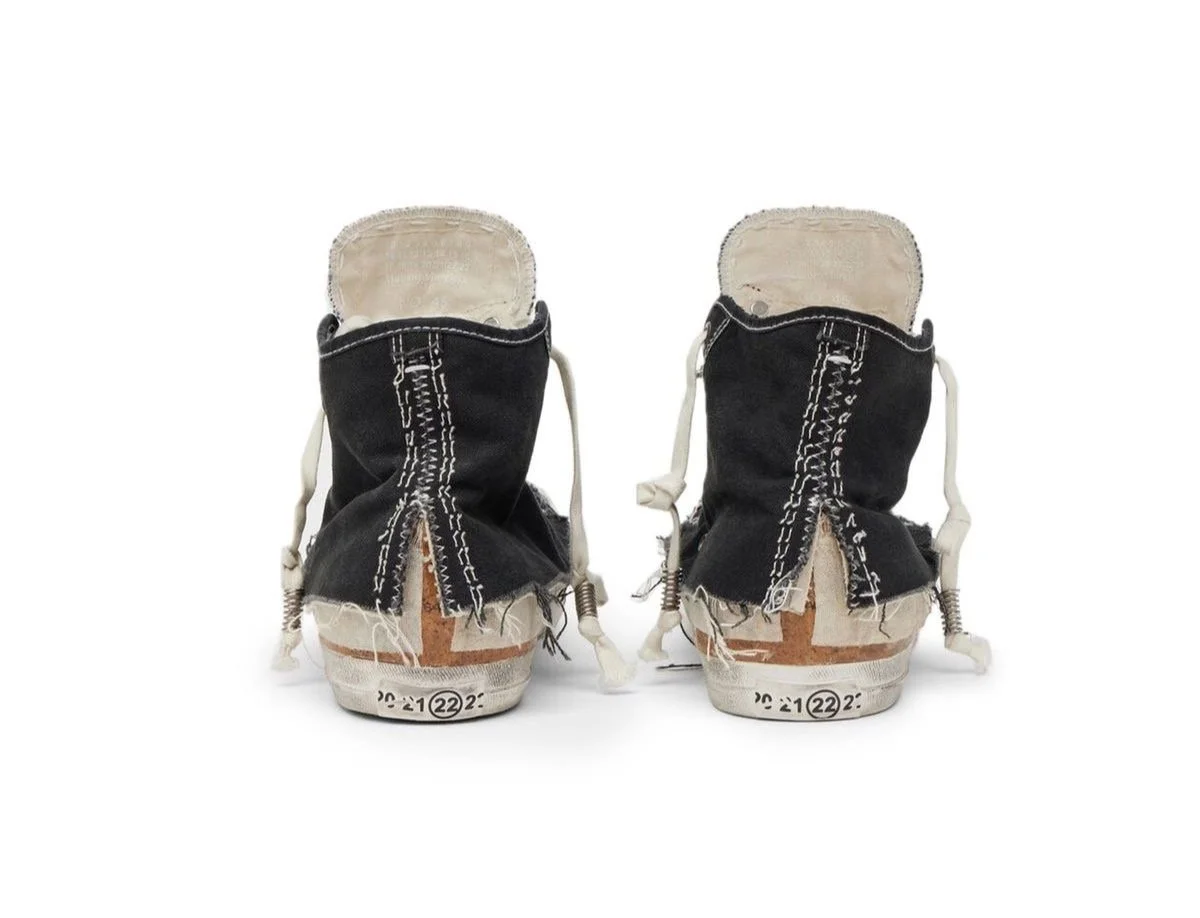

In addition, certain houses have monetized working class and or street culture aesthetics through runway shows or collaborations.
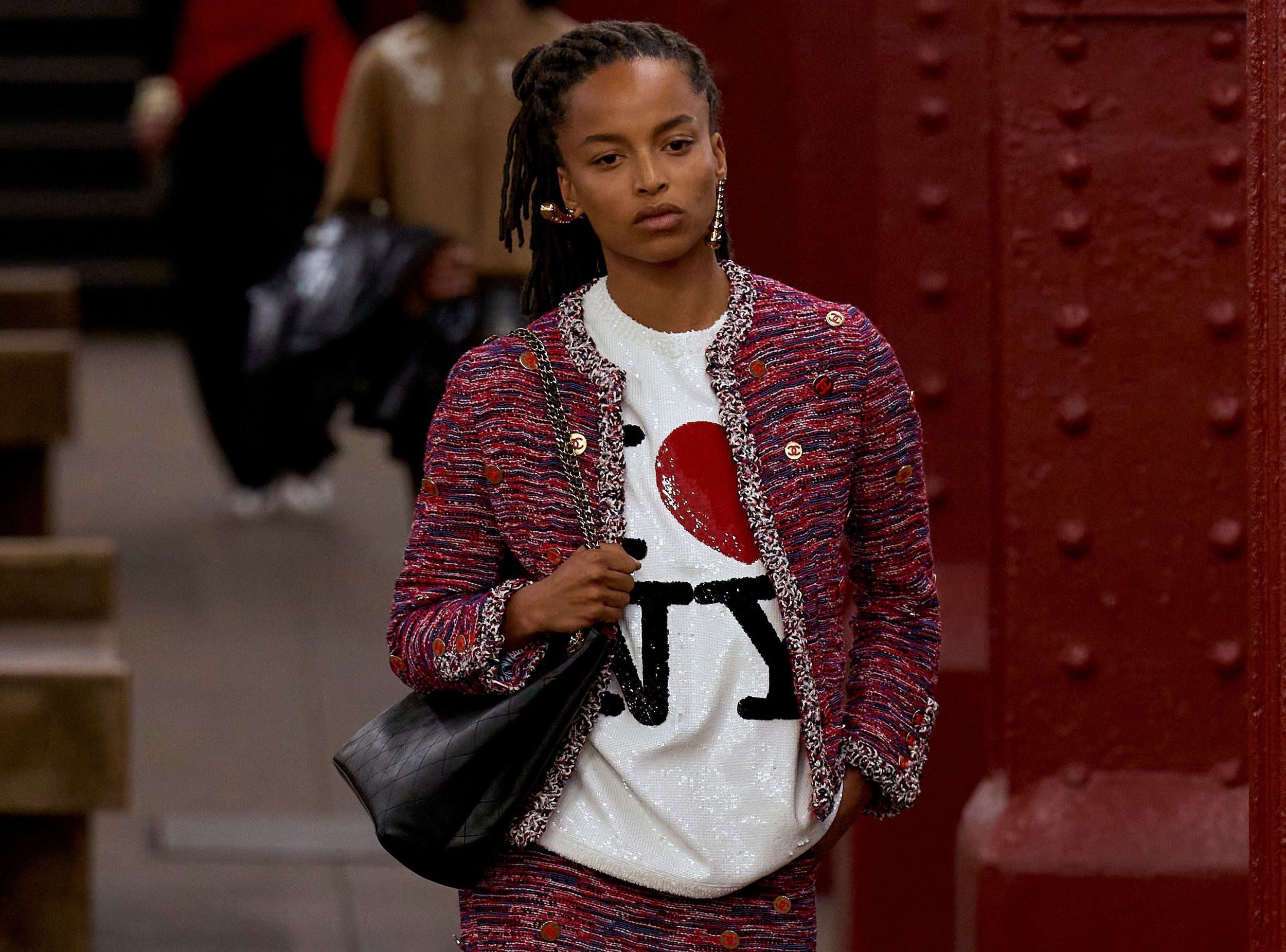
Chanel Métiers d’Art 2026
For example, Matthieu Blazy’s Chanel Métiers d’Art 2026 show staged its show in a decommissioned New York subway station, framing the "commuter aesthetic" as a luxury experience for an high-net worth audience, the majority of them have probably never been on a subway – and this is where the disconnect lies. By reinterpreting working-class staples, like lumberjack flannels and I Heart NY tees, through the lens of beaded high fashion, the brand transformed everyday urban life into high-margin status symbols.
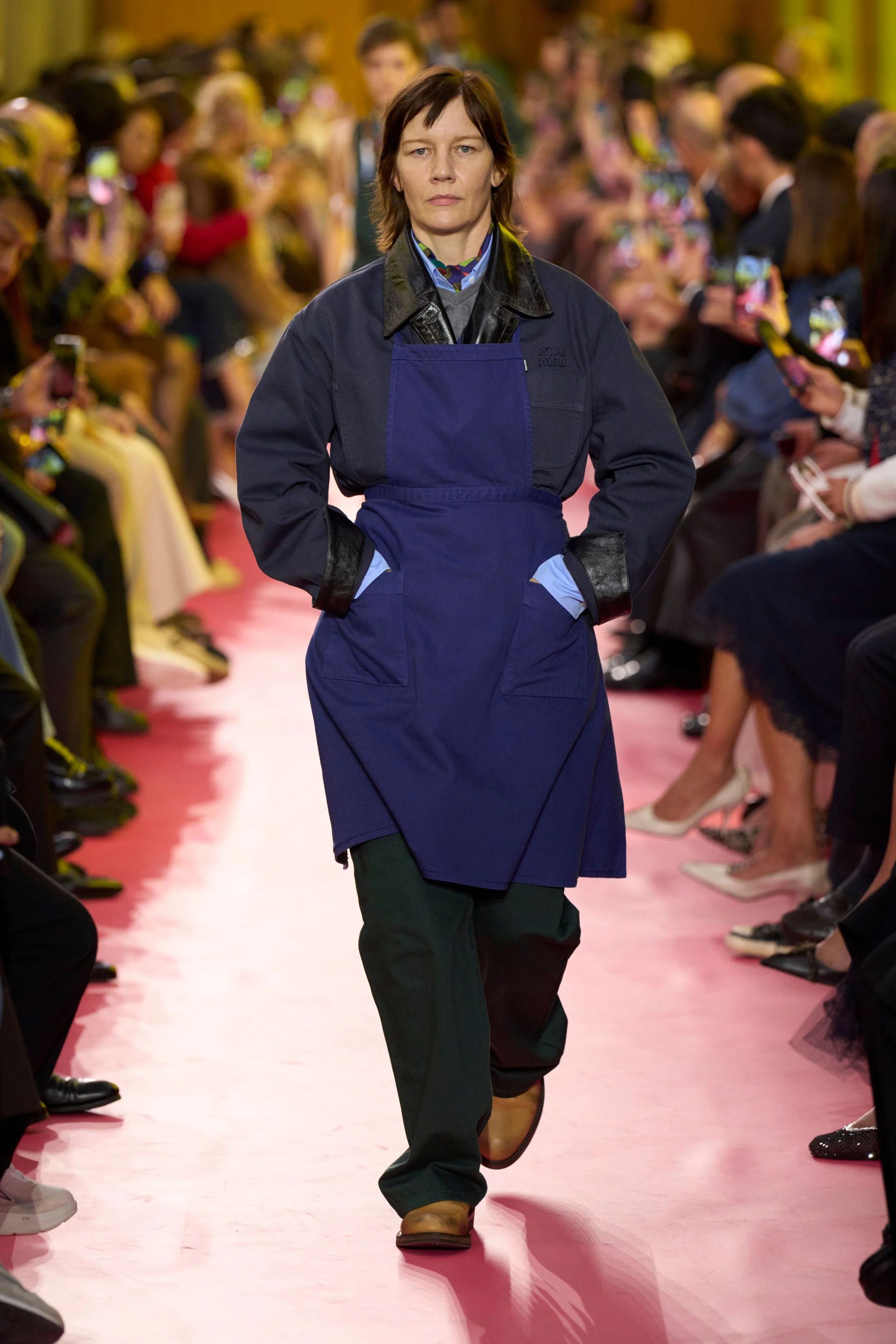
Miu Miu Spring/Summer 2026
Another example would the Miu Miu Spring/Summer 2026 show which framed the apron as a luxury fashion symbol, staging the runway to resemble an industrial factory cafeteria. By taking garments historically associated with domestic and industrial labour and reconstructing them in high-end materials like silk cloqué and lace, Miuccia Prada transformed the functional uniform of the working woman into a high-priced, status-driven aesthetic.
In terms of collaborations, the 2017 Louis Vuitton x Supreme merged the heritage of French luxury house with the rebellious New York skate brand, legitimizing streetwear from a ‘luxury’ perspective. Yet again, more skate culture influence.
I do not actually think this is inherently a bad thing. By reinterpreting working-class staples it could be perceived as a way of celebrating and elevating everyday culture rather than erasing it, not to mentioncreating pieces that feel genuinely wearable, rather than just reserved for exclusive events. When done thoughtfully, it can promote the creativity and resilienceof working-class aesthetics, turning them into symbols of pride and inspiration in a luxury context as opposed to just being used for profit margins. So, it’s clear that Golden Goose is not an isolated case.
However, what makes Golden Goose particular in comparison to the likes of Balenciaga or Maison Margiela is that these two fashion houses have always been catered towards a specific clientele who have always been into this sort of style whether it was trendy or not that is what their wardrobe has always consisted of.
Yet, in the case of Golden Goose, I feel that their sneakers, in particular, have become more “mainstream”in the luxury fashion industry compared to for example the“loved to death” Margiela sneakers as mentioned earlier. Now why is that exactly?
Speaking from personal experience I have purchased a couple of pairs & I had never been into this sort of distressed, streetwear style. What drew me were a few reasons:
1. I don’t have to worry about getting them dirty - well, I feel like that is obvious given their ‘worn in’ look. But, whenever I purchase a new pair of shoes I always feel scared to wear the shoe out for the first time in case it gets dirty or accidentally scuffed or something like that. I know that they are shoes & that they are bound to get dirty, but that has just always been my mentality, whether I like it or not. But with Golden Goose’s it already has embraced that lived experience before you have even worn it. Silly to some but those who get it, get it.
2. Customisation - A really unique aspect to the brand is that you can pay extra to have the shoe customized, whether that be, switching out the star, replacing the laces and or having an artist draw whatever designs you want on the shoe, it’s a cool feature.
For example, I saw this plain black leather pair with a suede star and I thought to myself as the extra person I am, but a black sparkly star would look so much better than a black suede star, for my taste at least. But then, I remembered - oh wait, I can do that. While I haven’t added designs on the main part of the shoe I have seen others do this and it adds a really personal touch to the shoe aligning with your authentic self, standing out from “mainstream” one could say. You can experiment with animal prints, floral motifs, shearling etc. They even release certain limited edition shoes, such as, a recent Disney collaboration with Mickey mouse on the shoe, exclusively at Selfridges.
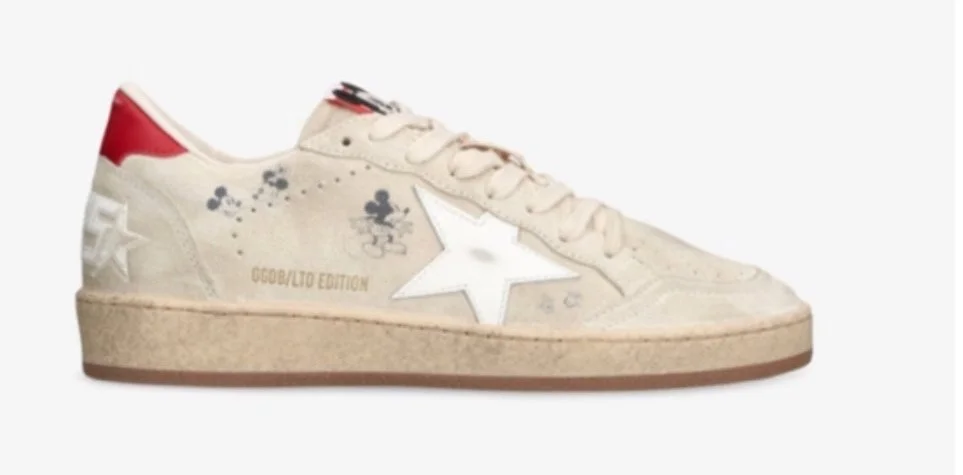
Mickey Mouse
By no means are they ‘cheap’. But, in terms of the shoe price point in the luxury industry they are relatively accessible with a minimum in-store price point of low £400s, sometimes you can find them for even less online. For the most exclusive pairs, usually in collaboration with Swarovski, they can enter the £1,000+ price point. However, if we are talking about the basic pairs they are relatively ‘approachable’ within a luxury fashion context.
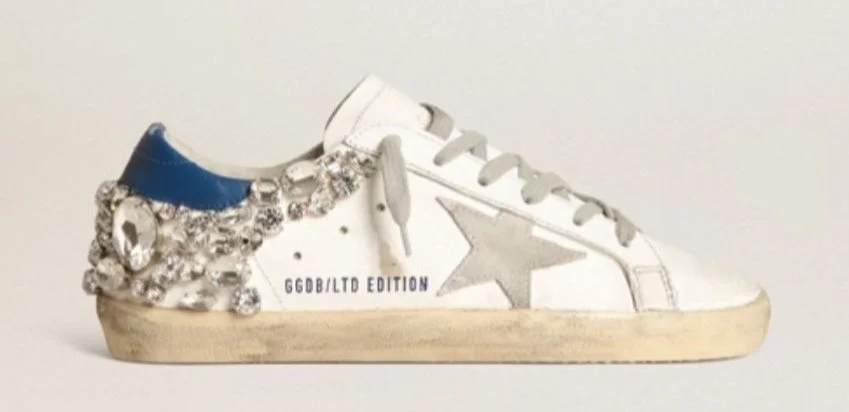
Swarovski
They are various star styles: superstar, ballstar, true-star, hi star, mid star, stardan etc. This makes it attractive to build up a collection & alternate daily wear through different styles.
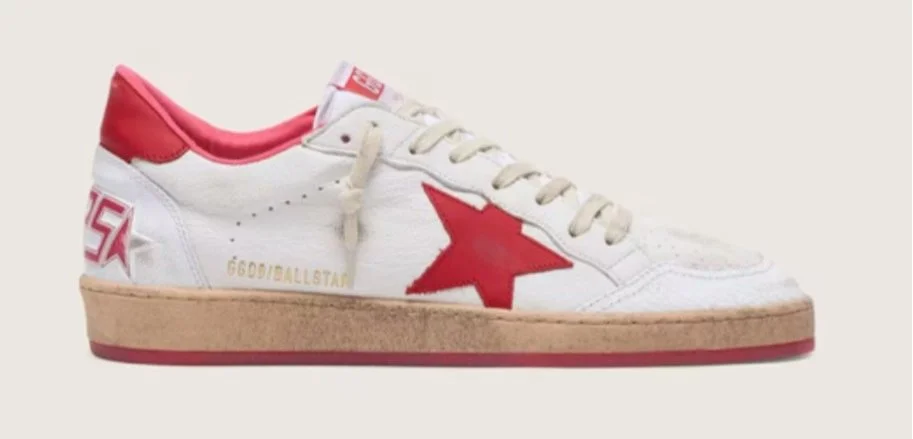
Ballstar model
The fact that they are intentionally scuffed, stained, and worn-looking could be seen as deliberate mimicry of the result of manual labour or economic necessity i.e not being able to afford another pair of shoes. By artificially reproducing these signs of hardship, the brand transforms markers of struggle and practicality into a curated aesthetic for affluent consumers. In other words, what once indicated resilience, thrift, or daily toil is repackaged as a symbol of style and individuality, detached from its original social context. It becomes a fashionable luxury as opposed to a lived reality.
The “superstar” their first ever shoe design was inspired, like many of their other designs, from LA skate culture. Early LA skaters often relied on DIY creativity, resourcefulness, and functional clothing, loose jeans, durable T-shirts, and worn-in sneakers, because of limited resources and the physical demands of skating. These visual markers of practicality & resilience were tied to necessity rather than luxury fashion - two opposite ends of the spectrum.
Their shoes are marketed through narratives of craftsmanship, individuality & as previously mentioned their ‘lived-in’ souls which you can easily find on their website with their section dedicated to stories. Using words such as “homage”, “craftsmanship”, and “skate people” create the impression that the shoes are connected to real subcultural or working-class experiences. The irony, however, lies in the fact that these stories are carefully curated marketing tools: the distressed, worn appearance is manufactured in a luxury workshop, and the shoes are sold to affluent consumers who are unlikely to experience economic hardship, let alone skate. I cannot count the number of times I have seen people wearing Golden Gooses with a Chanel or Hermès bag. It takes away the authenticity of the skater experience by marketing the sneakers as authentic to the person who wears them. Thus, creating a paradox in which the shoes simultaneously signal subcultural authenticity and status.
While Golden Goose draws on working-class and skate aesthetics, the distressing can also be seen as a creative design choice that challenges traditional luxury ideals of perfection and newness. The worn appearance and individuality of each shoe can be interpreted as an artistic expression or simply act as a practical choice when running day-to-day errands while still looking fashionable.
From this perspective, the brand participates in a longstanding tradition of fashion innovation, where subcultural and everyday aesthetics are reimagined through design, not intended to marginalize people from disadvantaged backgrounds. This is further reinforced by their “community of dreamers” motto that positions the brand as inclusive and aspirational, emphasizing creativity and lifestyle ideals rather than literal working-class origins.
They also mention that there is “beauty in imperfection”. This could lead one to believe that the distressed aesthetic is a deliberate challenge to traditional luxury fashion’s emphasis on pristine, flawless products. By celebrating wear, scuffs, and irregularities, Golden Goose normalises imperfection, reframing what luxury can signify and suggesting that the appeal lies in being comfortable, creative, included, having fun, not being intimidated by luxury fashion & overall feeling like your true self by not conforming to the masses, by creating your own shoe that no one else will have, rather than solely in mimicking working-class struggle or street culture.
Golden Goose draws on working-class and street aesthetics, but it also reframes them as symbols of creativity and individuality. While the brand profits from subcultural markers of wear and resilience, it simultaneously challenges traditional luxury ideals, making its sneakers both a commodity of street culture aesthetics & working-class class influence, but also as an expression of personal style. Authenticity itself becomes a form of luxury, imperfection is made desirable.