
From the Grid to the Front Row
How Formula One Became Fashion’s Most Coveted Runway
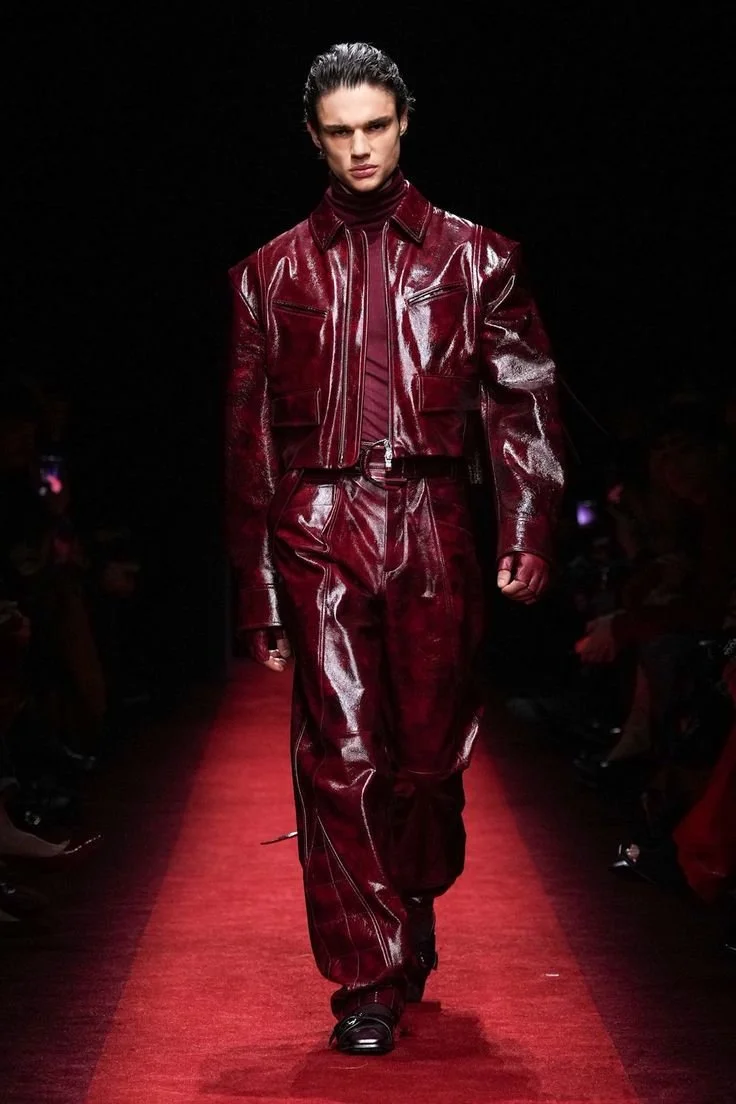
Ferrari A/W 2025
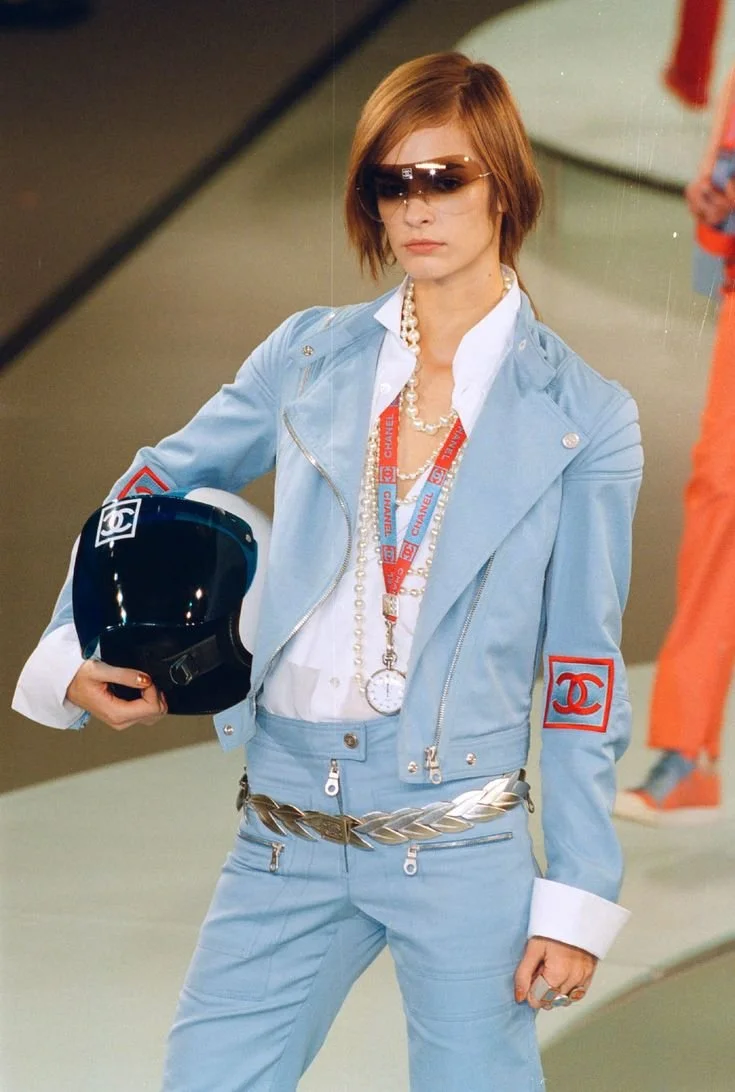
Chanel S/S 2002
Formula One has long embodied the worlds of luxury, glamour, and exclusivity. For decades, the sport’s visual language - speed, precision, status, and spectacle - has provided fertile inspiration for designers seeking to capture the thrill of modern luxury. From Karl Lagerfeld’s sleek interpretations at Chanel to motorsport-infused collections from Dsquared2, Tommy Hilfiger, and Hugo Boss, the influence of racing has repeatedly surfaced on fashion’s biggest stages.
Yet while Formula One has inspired fashion for generations, the relationship has evolved dramatically in recent years. The focus is no longer solely on how designers interpret motorsport aesthetics. Instead, attention has shifted to the paddock itself, transforming race weekends into one of the industry's most influential style showcases.
Today, the Formula One paddock functions as a travelling front row - a global luxury ecosystem where celebrities, athletes, models, influencers, and executives converge against the backdrop of one of the world's fastest-growing sports. What was once considered a behind-the-scenes sporting environment has become a powerful cultural platform, attracting unprecedented interest from luxury houses eager to reach Formula One’s increasingly affluent and fashion-conscious audience.
The rise of social media has accelerated this transformation. Every race weekend now generates thousands of images documenting not only the action on track but also the style statements unfolding beyond it. Luxury brands have quickly recognised the opportunity. Front-row fashion moments that once belonged exclusively to Paris, Milan, London, and New York now occur regularly in Monaco, Miami, Singapore, Las Vegas, and Abu Dhabi.
Much of this shift has been fuelled by growing public fascination with Formula One’s off-track personalities. The partners of drivers, often referred to as the sport’s WAGs, have become influential figures in their own right, attracting significant media attention and cultivating loyal digital audiences. Figures such as Alexandra Saint Mleux and Kelly Piquet have transformed race weekends into highly visible fashion events, while celebrity appearances from figures including Kim Kardashian have further elevated the paddock’s profile as a luxury destination.
For fashion brands, the commercial opportunity is enormous. A single paddock appearance can generate millions of impressions across social media platforms, exposing luxury labels to a global audience that is young, affluent, and increasingly engaged with both sport and style. As Formula One continues its rapid international expansion, particularly across the United States and the Middle East, brands are viewing the sport less as a sponsorship opportunity and more as a cultural marketplace.
The scale of that opportunity is perhaps best illustrated by Gucci's landmark partnership with Alpine. Beginning in 2027, the team will compete as the Gucci Racing Alpine Formula One Team in a multi-year agreement reported to be worth approximately $150 million. The deal represents a watershed moment for both industries. While luxury brands have maintained relationships with Formula One for decades, Gucci's investment signals a deeper commitment, positioning fashion not merely as an observer of the sport but as an active participant in its future. More importantly, it demonstrates how Formula One has evolved into one of the most desirable marketing environments in global luxury.
The significance of the partnership extends beyond branding on a race car. For decades, fashion looked to Formula One for inspiration; now, luxury houses are investing directly into the sport's infrastructure and identity. Gucci's move reflects a broader shift in how luxury brands approach cultural relevance. Formula One offers something few platforms can match: a unique combination of wealth, aspiration, celebrity, innovation, and global visibility. For brands seeking meaningful engagement with younger consumers, the paddock has become as valuable as the runway.
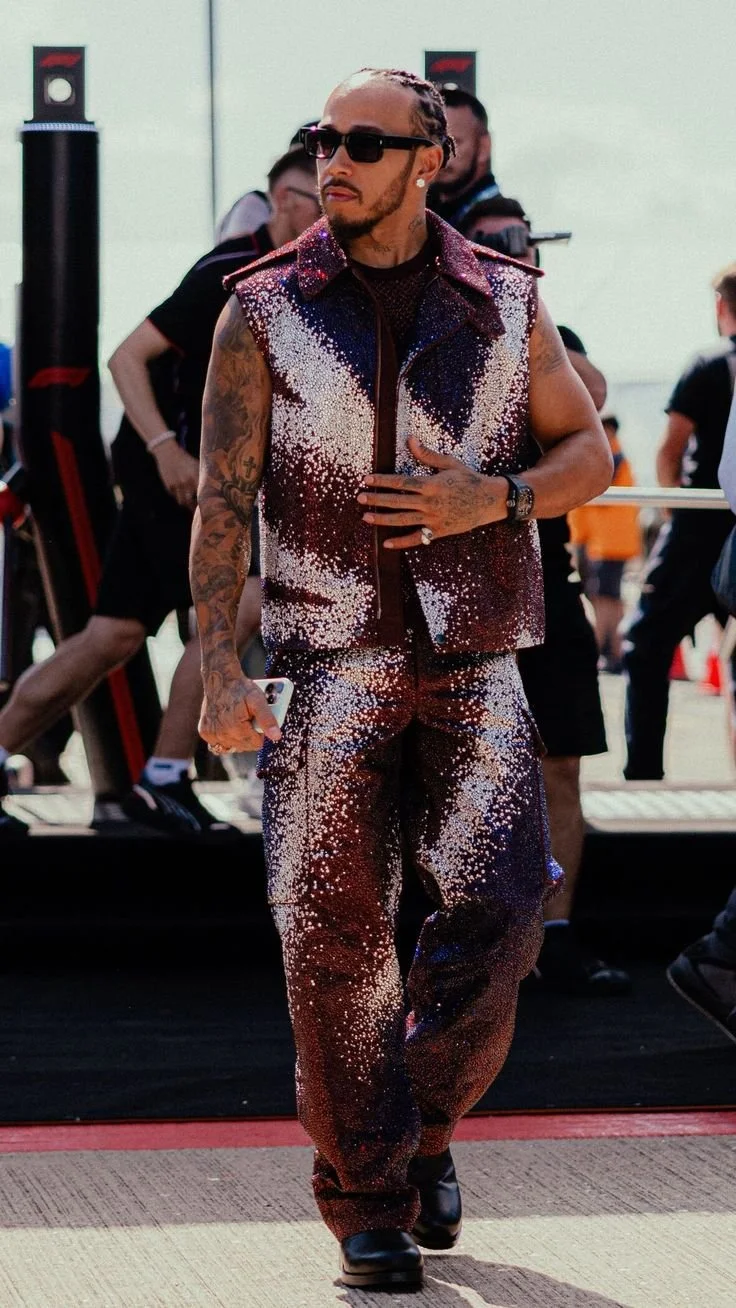
At the centre of this intersection between sport and style stands one man: Sir Lewis Hamilton.
The seven-time Formula One World Champion has become one of fashion’s most influential sporting ambassadors, transcending the traditional boundaries of athlete endorsement. While athletes have long collaborated with luxury brands, Hamilton’s relationship with fashion feels fundamentally different. Rather than serving as a brand ambassador alone, he has established himself as a genuine participant in the industry’s creative conversation.
His arrival in the paddock is now one of the most anticipated moments of every race weekend. Long before engines fire on Sunday, photographers and fans gather to capture Hamilton’s latest look — an event that has become almost as ritualistic as qualifying itself.
Over the years, Hamilton has championed an eclectic roster of designers, seamlessly moving between avant-garde experimentation and established luxury houses. From Issey Miyake’s architectural silhouettes and Givenchy’s sharp tailoring to the contemporary edge of Rick Owens and the distinctly British heritage of Burberry, Hamilton has demonstrated an instinctive understanding of fashion as a form of personal expression.
Importantly, his influence extends beyond clothing. Hamilton has consistently used fashion as a platform to challenge conventions surrounding masculinity, identity, and self-expression within professional sport. In an environment historically associated with rigid ideas of athleticism and masculinity, his willingness to embrace bold silhouettes, jewellery, colour, and unconventional styling has expanded perceptions of what a modern Formula One driver can represent.
This authenticity is perhaps what separates Hamilton from many athlete-fashion partnerships. His style rarely feels manufactured or overly strategic. Instead, it reflects genuine curiosity and engagement with the creative industries he inhabits. Whether attending the Met Gala, collaborating with luxury brands, or arriving at a Grand Prix in a carefully curated look, Hamilton projects a sense of effortless confidence that resonates far beyond motorsport.
His impact has also opened the door for a new generation of drivers to engage with fashion more openly. Increasingly, Formula One competitors are cultivating personal style identities, recognising that their influence extends beyond performance statistics and championship standings. Fashion has become another arena in which drivers can connect with audiences, build personal brands, and participate in broader cultural conversations.
For luxury fashion, the appeal is obvious. Formula One offers access to a rare combination of prestige, wealth, celebrity, and global visibility. For the sport, fashion provides an additional layer of cultural relevance that helps broaden its appeal beyond traditional motorsport audiences.
As Formula One continues its transformation into a global entertainment powerhouse, the relationship between racing and luxury fashion appears stronger than ever. The circuit remains a showcase for engineering excellence and sporting achievement, but increasingly it is also a stage for style. The arrival of luxury giants such as Gucci as major stakeholders in the sport only reinforces that reality.
And while the paddock may now be filled with celebrities, influencers, and luxury-brand executives, one figure continues to define its fashion narrative. Lewis Hamilton is no longer simply Formula One’s most stylish driver. He has become one of the most significant fashion figures in modern sport - proving that influence, much like speed, is often measured by the ability to stay ahead of the field.