
What is Haute Couture? Does it have any relevance nowadays?
By Louis Lorgis-Leech
With Haute Couture Week 2026/2027 starting I felt it was important to dive into the origins as well as traditions of Haute Couture in order to better understand it and whether or not it should have a place in society in modern times.
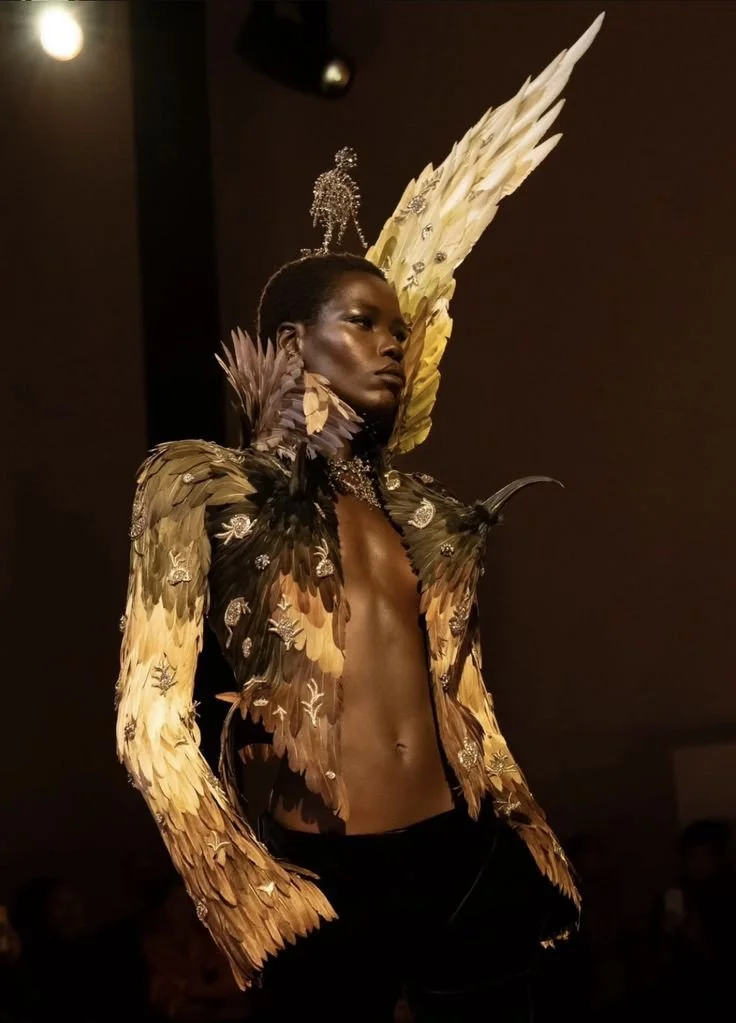
Haute Couture in French literally translates in English to “high-end dressmaking”. This would make sense given that the qualifying adjective “haute” in French has historically been associated with the elite from haute cuisine to haute technologie all relating to thehaute société of course. Idiomatically Haute Couture means custom-made to measure garments with exceptional handmade craftsmanship (if only nowadays for regular fashion) for individual clients, usually only one to three pieces of each garment are created.
Legally, according to Fédération de la Haute Couture et de la Mode, it refers only to fashion houses that meet strict standards set by them. To be officially regarded as haute couture, a house must satisfy requirements such as:
The house must operate an atelier in Paris that employs at least 15 staff members full-time
They must have at least 20 full-time technical professionals working in their workshops.
They must present a collection of at least 50 original designs every fashion season (twice a year, in January and July). This must include both day and evening garments.
Even if they meet the previous requirements, the house must be officially designated and invited onto the official calendar, a status that is reviewed and must be renewed each season.
For example, Gucci and Louis Vuitton, two of the most well-known luxury fashion houses, are not legally as well as technically haute couture houses as they do not meet the requirements. So it isn't just “very fancy clothing” it is a whole system of fashion-making where:
each garment is custom-designed for one person’s body
fittings happen multiple times (this can be seen in the movie Mrs Harris goes to Paris which features Dior)
sewing, embroidery, and finishing are mostly done by hand
the focus is artistry and technique rather than mass production
Haute couture developed in 19th-century Paris, when fashion started shifting from local dressmakers to named designers.
The Origins:
A key turning point was the rise of Charles Frederick Worth, often considered the first true “fashion designer” in the modern sense. Before him, dressmakers mostly followed what clients requested. Worth changed that by:
designing seasonal collections in advance
showing designs to wealthy clients
putting his name on clothing labels like an artist signing a painting
This helped create the idea that fashion could be author-driven art, not just tailoring.
Paris became the centre because it already had:
a strong luxury textile industry
wealthy aristocratic and later bourgeois clients
a culture of craftsmanship in tailoring and embroidery
Over time, other designers and houses followed, and couture became a formalized tradition through the creation of the Chambre Syndicale de la Haute Couture (1868) and the Haute Couture legal protection status (1945).
Tradition:
Haute couture developed its own strict customs, especially in Paris:
1. Made-to-order clothing - No mass production.
2. Atelier craftsmanship - Think seamstresses, pattern makers, textile specialists where a single garment can involve dozens of people.
3. Multiple fittings - Clients come in repeatedly so the garment is adjusted perfectly to their body. Fit is central to the process, almost like sculpting fabric around a person.
4. Seasonal collections - Designers present collections twice a year in January and July. These shows are not primarily for selling ready-to-wear items, but for demonstrating creativity, skill, and influence.
5. Prestige and exclusivity - Historically, couture was tied to royalty, aristocracy, and very wealthy clients. Even today, it remains extremely exclusive not just because of price, but because of the time and labour involved. Industry experts estimate there are roughly 2,000-4,000 active haute couture clients worldwide.
Given all of this information, is it still relevant today?
Modern haute couture is less about everyday clothing and more about preserving traditional handcraft techniques in order to showcase extreme creativity reinforcing a brand’s artistic identity.
It often influences ready-to-wear fashion later, but couture itself is not meant for mass consumption.
Therefore, in the fashion world I would say that it still remains relevant from an artistic standpoint where the focus isn't just on how much can be produced at the lowest price possible. Quality is being prioritized here. Think of it like a museum of fashion just like you would visit an art museum - the two often intersect!